Aloha 👋🏻
Welcome to the On the Waves of Change newsletter. The place where quiet people find their voice.
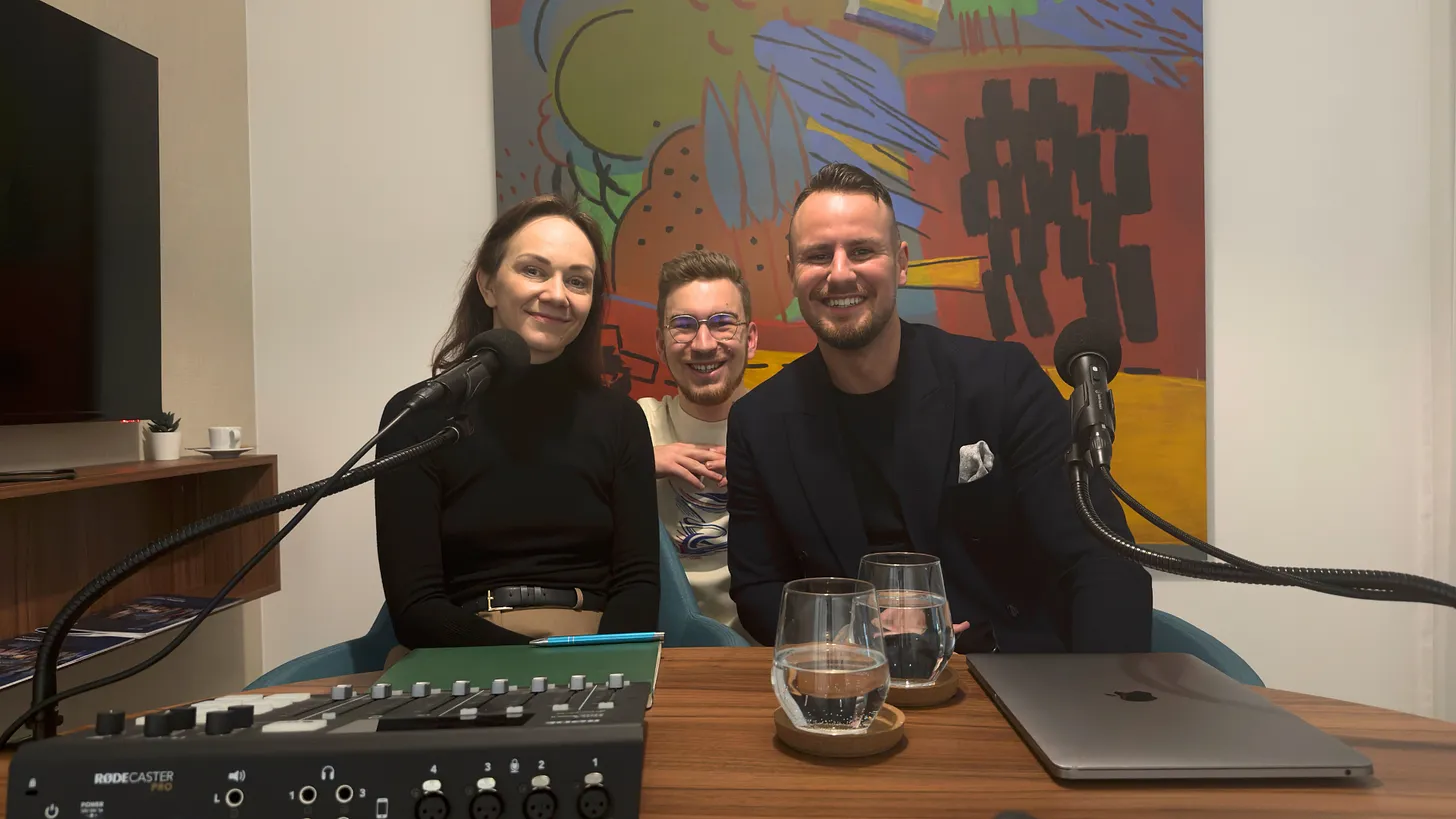
Today's lines belong to Aleš Muselík, financial expert and founder of the creative agency SyncSouls Creative, who lived in "I have to" mode until November 2024, when his body said: enough.
115 kilos. Panic attacks. The feeling that his life was collapsing like a house of cards. Life gave him an ultimatum: change, or lose everything you care about, including yourself.
Out of that realisation he created the 4 Quadrants of Life system, which he shares with people on Instagram at @4kvadrantyzivota, so that others do not have to hit the wall as hard as he did.
Are you living a life full of "I have to" as well?
Every morning you get up and you already know: today I have to meet Karel, then I have to deal with yesterday's e-mails, I have to do this and then that. Running through the days, under stress and pressure.
Sometimes perhaps just out of habit. Sometimes because you cannot see that you could live differently.
Aleš spent a few years like this. As he says himself:
"There were so many things I felt I had to do. And I was actually abandoning my sense of purpose entirely."
Until the moment his body put a stop to that life full of "I have to".
What came up in the conversation (and why it is worth a listen):
She was my last pillar and I was afraid of losing her
There are moments in the conversation with Aleš when a shiver runs down my spine. Especially when he talks about the panic attack that broke everything open, and how he found the inner strength to change his life.
"I had that panic attack after an argument between us, which ended with the suggestion that maybe we would not live our whole lives together. And I collapsed in that moment, because she was the last pillar my life was standing on. That sense of safety and the certainty that you have a partner beside you who will hold you up. And I fell apart. She did not know what was happening to me. Then she saw it was serious, because I signalled with my eyes that I needed help. And that was the first time I allowed myself to ask for help."
How many of us feel we can handle everything alone? Until we reach the moment when we finally allow ourselves to say: I need help.
When the body puts a stop to things, it is the last chance to change
When I ask Aleš what a panic attack looks like, he does not reach for medical terms. He gives me his experience in his own words:
"When you have a panic attack, you do not know it is coming. It builds up gradually over a long period and it is caused by a huge amount of stress, a huge amount of pressure, which of course reaches a point where neither your body nor your head can cope any more, and you fall into an anxiety that ends in a state I would describe as a heart attack. I felt I could not breathe, that I was going to faint, my heart started pounding, I could hear it inside my head. And then it is a complete explosion of emotions, anxiety, sadness, tears, and honestly a state where I felt my world was collapsing."
You do not know when it will end. You do not know what you need. Whether it is a hug, or just knowing you are not alone in it. And it was precisely that moment that gave Aleš the impulse to want to live differently.
14 days after the panic attack: 4 circles that revealed the truth
"I sat down, drew four circles and said: just map your life out simply. I drew relationships, health, work, personal growth."
That is how the system that showed him how to change his life came about. The 4 Quadrants of Life. And when he looked back at how he had been living?
"At work, in that compulsion to have oxygen - money - work was overflowing. I looked in the mirror at a 115-kilo bloke who used to be slim and physically fit. My lifestyle was insane, I ate irregularly, I drank alcohol. And as for relationships, it was not good between friends, at home with my wife, or in the family."
From the role of victim, where at first he felt terribly sorry for himself, he gradually moved into the role of creator. He stood up for his life and started building it differently.
Anchor points and quick wins
How many of us want to live differently? We start on Monday. By Wednesday we give up. And on Sunday we tell ourselves we will start again. On Monday.
"If I had wanted to switch everything at once into the state I am in today, I probably would not be sitting here, because I do not think it is manageable."
Hence the milestones. The anchor points. Small wins every day.
"When you set yourself milestones and some gradual steps, you have anchor points in your life. People also need those quick wins. So they can say: good, I have managed to exercise three days in a row."
Small steps. Every day. That is how you build change that lasts.
The death of Mr Muselík
"You have a suit on, so you are at work, so you are Mr Muselík. Then I switched into a T-shirt and shorts and I was simply Ála. Then I went to a party and I was Aleš the party animal, the showman, the entertainer and the life and soul."
Until Aleš realised he did not want to play roles any more.
"Today it is Aleš. Just Aleš. Nobody else."
And it is precisely that naturalness that the people around him and his clients value most today.
The worst advice he was ever given
"You still have time for that."
Aleš answers it simply:
"Nobody actually knows how much time we have. You can change your life right now. You do not have to wait for Monday or for the first of next month. You can do it right away."
What else comes up in the conversation?
- How does Aleš see the darker side of financial advice, and the practices in the field that frustrate him?
- How are the generations changing their approach to money, and why might Generation Z be the first to be genuinely prepared for retirement?
- How does he see the future of financial advice and the role of artificial intelligence in it?
Happy reading, happy listening - until next time. 👋🏻
Take good care.
Aleš and Viki are waving at you.