Aloha 👋🏻 Welcome to the On the Waves of Change newsletter. The place where quiet people find their voice.
Today's lines belong to Markéta Hniličková, a woman who helps families transform their relationships and communication every day. She works in depth on functional parenting, the method of extraocular vision (EOV) and rites of passage.
And that is not all. She is a woman who forges her way through life with enormous drive. In December she nipped off to run a half marathon in Cairo (just for the fun of it) and she is also a mother of four.
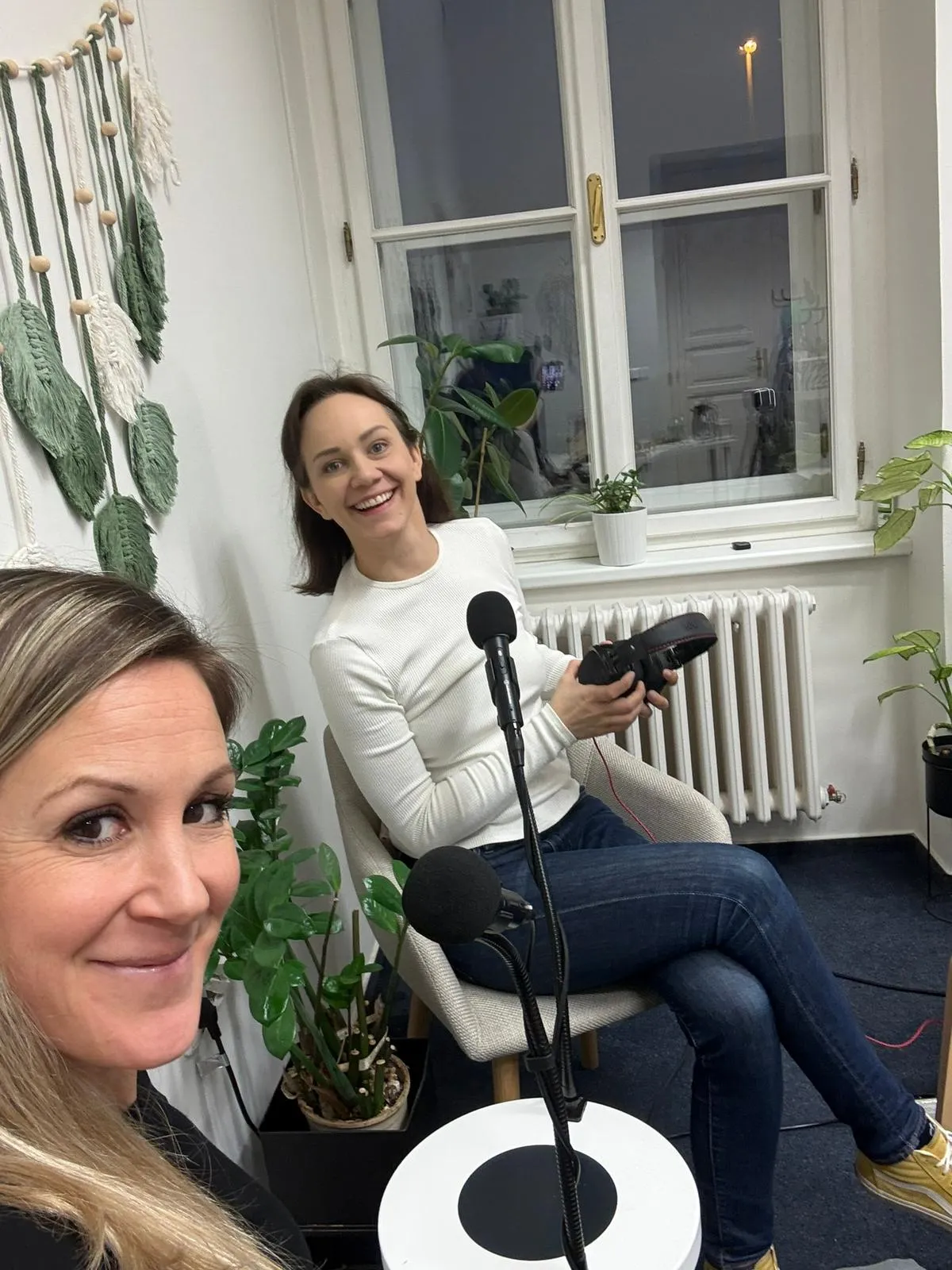
Is there such a thing as a bad parent?
That is a question you may well be asking yourself too.
And Markéta answers it with the directness that is so typical of her, without good/bad labels and without recipes along the lines of "do this and it will work straight away".
This is a kind conversation for all parents and non-parents. For everyone who has ever paused and thought: "What if I am, or will be, a bad parent?"
What came up in the conversation (and why it is worth a listen):
I did not want to put on a performance for children
For several years Markéta believed she did not actually want children, because she did not want to put on the performance we as adults so often act out for them.
Do you know the sort of thing? "Mummy won't come for you if you don't finish your soup." "Look, a bird!" (just to stop the child crying - we distract them.)
For Markéta, parenting used to mean what she saw in others:
"Those adults treat children as if they were stupid, they bring them up through lies. And it felt embarrassing towards the child. I said to myself: I do not want to do this, that is why I am no good with children."
And then it hit her: it was not that she was no good with children. She simply wanted to be truthful with them. She wanted to live with children differently.
A good parent is not one who does everything right
When I ask Markéta who a good parent is, she does not tell me "the one who reads parenting books" or "the one who makes no mistakes". For her it is:
"A good parent is a parent who notices - themselves, the children, what is going on. Who is present and compassionate. And who works on it."
It does not mean being perfect. It means noticing and having the courage to change it.
When there is a big crate in your path and you are meant to jump onto it. What now?
"The doubt does creep in. At the same time I trust that the crate is there for me. If I am meant to get past that crate, I will manage it somehow. I will climb over it, go around it, or it will simply dissolve."
The same is true of parenting. An obstacle, discomfort, uncertainty is not a sign that you are doing it wrong. It is part of your journey.
I will be different from my mum/dad…
We have all said this at least once in our lives: "I will never do that to my children." And then we did exactly that.
"We can change only 60 per cent of how our parents brought us up. The other 40 per cent is written into our bodies - through thousands of repetitions. And on that 60 per cent we will have to work really hard."
"We can be different from our parents the moment we accept that we are the same as them."
Does that sound like a paradox? As long as we think we are completely different, the automatic pilot inside us keeps running. Only when we admit: yes, I actually do this too, can we start working with it consciously.
And then comes the moment that says it all…
Markéta shares how her children started saying to each other: "Be quiet." And she thought: "They did not get that from us. We do not talk to our children like that at all."
Until the moment she was sitting at the computer, her son came over to her and she said completely automatically: "Be quiet."
She stopped and said, surprised: "That was from me. They got it from me." And you know what? That is fine. Because she noticed it and could change it.
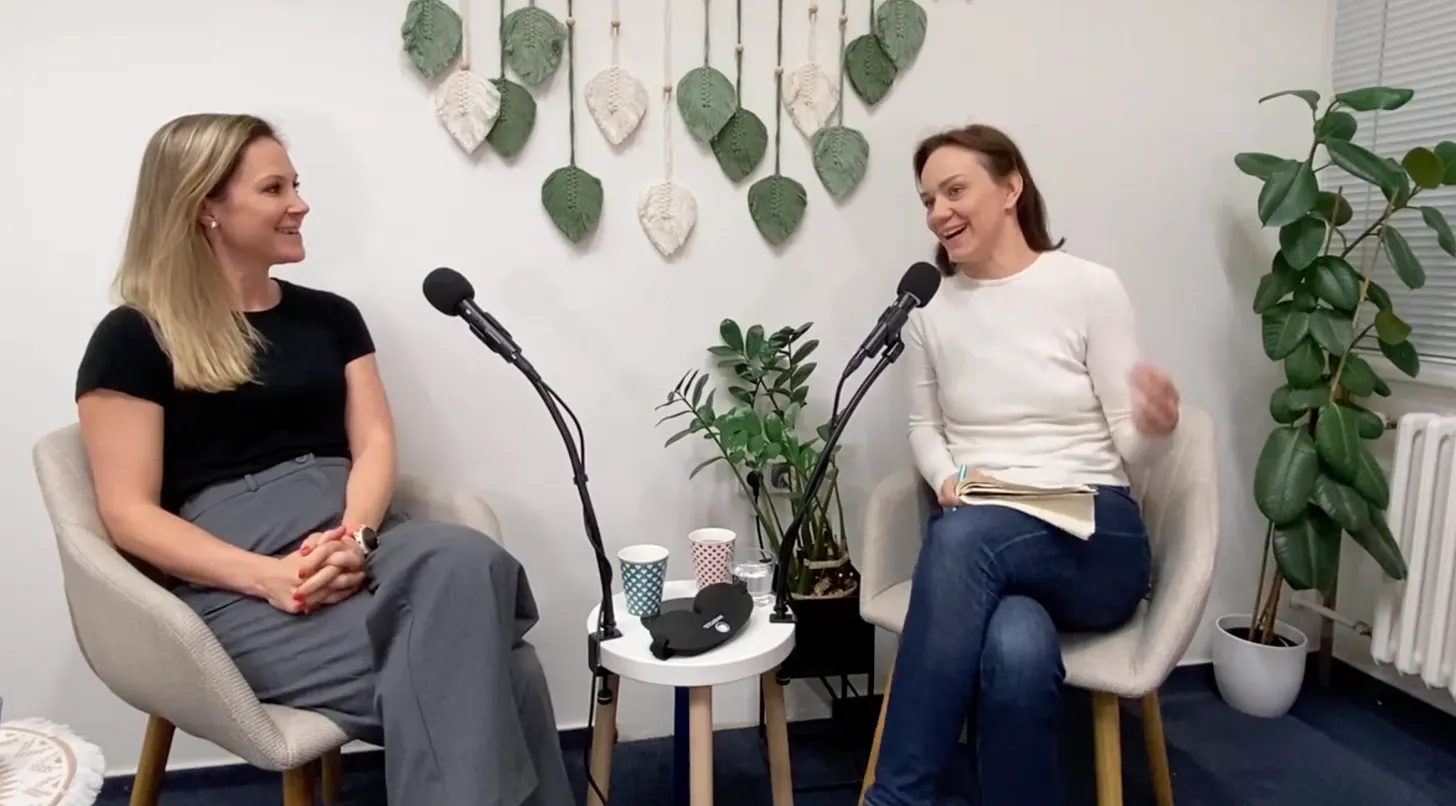
On boundaries that do not confine, but protect
"Children fundamentally need boundaries. Not because we want to limit them, but because boundaries protect. A child without boundaries carries the responsibility for decisions it is not yet able to bear. And that is a burden."
"The problem is not that we want to give children freedom. The problem is when I give them responsibility they cannot yet carry."
Boundaries are not a prison. Boundaries are a fence that tells the child: here you are safe.
Why children create their own rites of passage (and how that turns out)
"They kept bringing in young lads injured from insane motorbike jumps. And at the same time drunk girls who had come out of a bar and ended up being sick under a table. And he started to investigate - why is this happening?"
"If we do not give children a conscious rite of passage, they will create one for themselves. Because we fundamentally need confirmation that we belong to the group that is one step higher."
How Markéta sees a rite of passage:
A conscious leaving behind of the old role - "You are not a nursery child any more."
The in-between space - "You are not a schoolchild yet, but you are no longer a little child."
Recognition by the community - "You are seen. You are heard. We will never treat you like a nursery child again."
One piece of advice Markéta was given and values
"Trust the people close to you who look after your children. Even if they put the nappy on the wrong way round - they do not mean any harm, they are doing the best they know how."
What else comes up in the conversation?
- How does the method of extraocular vision work and what does it help with?
- Why is adolescence harder when children do not experience rites of passage?
- What is life like in Markéta's family, how do you parent four children and give them attention?
- What was the worst advice Markéta was given (and why she did not take it to heart)?
Happy reading, happy listening - until next time 👋🏻 Take good care. Markéta and Viki are waving at you.