Aloha 👋🏻
Welcome to the On the Waves of Change newsletter. The place where quiet people find their voice.
Imagine a morning when getting dressed feels like lifting a hundred-kilo barbell. Putting on make-up is a superhuman feat. The only relief comes from the morning injection at the doctor's surgery. And then you get to work and someone says: "You look great." While you feel like a building set that has collapsed.
Today's lines belong to Nela Mizera, author of the book "Mizerná nejen artritida" (Lousy Arthritis, and Not Only That).
She has lived with psoriatic arthritis for ten years. At thirty-six she had a stroke. And she still says she is enormously lucky in life. She could have stayed quiet about her illness; instead she grabbed a keyboard and wrote a book full of humour, with no varnish on it, illustrated by her daughter Laura. All the proceeds go to the Czech Rheuma League.
She is also a woman from Karviná. People there do not beat about the bush, so expect a story told with proper Karviná bluntness.
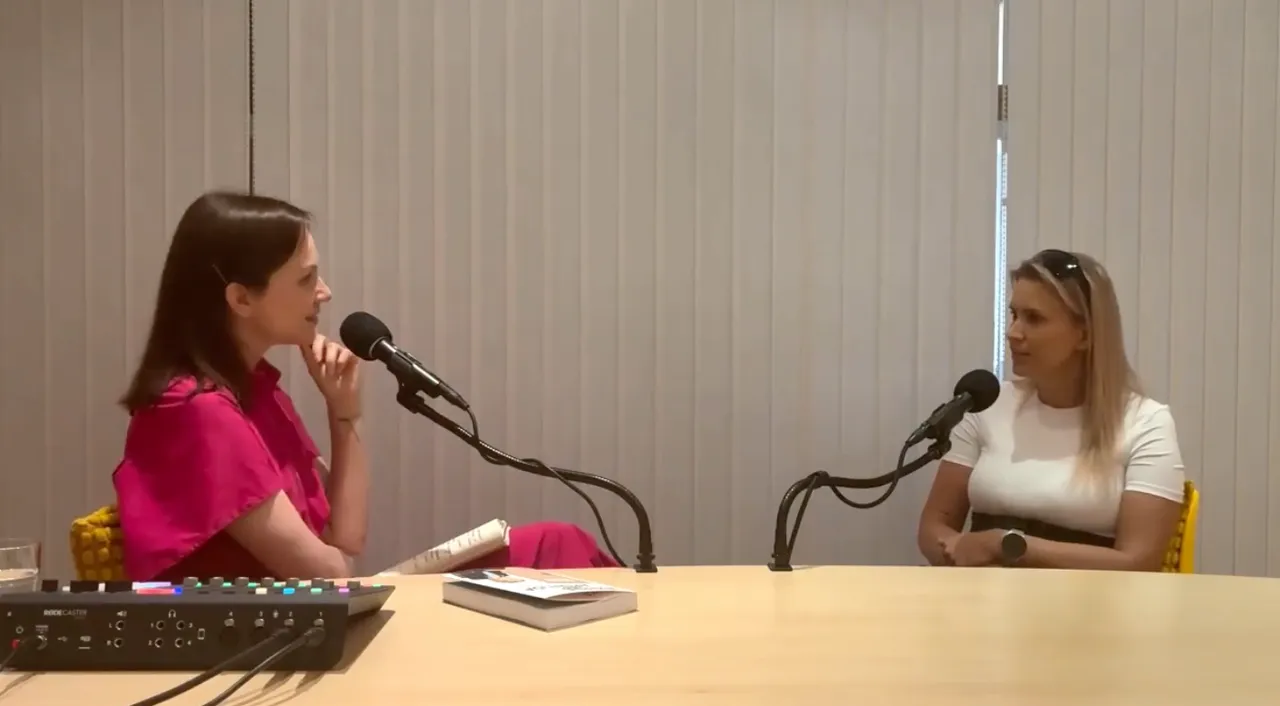
What do you do when one morning your body says no?
You can feel sorry for yourself. You can drown in it. Or you can kick the illness in the backside.
Nela chose the second. She does not treat the illness as an enemy, but as a sidekick she blasts out of bed with humour. This conversation is about the fact that even with a lousy hand of cards you can play for real. Not just survive.
What came up in the conversation (and why it is worth a listen):
The body serves, Nela hits back
Before she started biological treatment she walked on crutches and could not dress herself in the morning - her husband helped her. She could have fallen apart. Instead she held a dialogue with her own body:
"So you wanted to leave me in bed, you cow? I walked it off anyway."
Humour and a few swear words are her relief, an inseparable part of who she is. The thing that keeps her afloat. Let me borrow one quote straight from the book:
"My joints are in such a state that they wanted to cast me in the Titanic remake as the sinking wreck."
It can always be worse
This sentence goes with Nela almost every day. She realised it especially in hospital, among other people who were ill - next to a woman with a tumour in her jaw, next to people who had lost limbs.
And then came the stroke. At thirty-six. An ambulance, one leg she suddenly could not control. Her mum rang her, terrified. Nela answered in her own way:
"Mum, it's fine, it's only a leg. I've still got the other one."
She learned to walk again so well that today nobody would notice a thing.
"I had a stroke. And I am still lucky in this life."
Out of the pain came a book that helps others
The idea came after the stroke, during a period of severe migraines and anxiety. Nela needed to get it all out of her head and onto paper. What started as a personal story became help for other people with the illness - she pulled data, read specialist publications, approached doctors to vouch for the content. Hundreds of hours of work. More than 700,000 people in the Czech Republic live with a rheumatic condition, and there is very little information out there.
"I wanted someone to read it and say to themselves: it is not okay, but life goes on and you can live with it."
A fortnight after publication, a reader wrote to say she had hit rock bottom and the book had kicked her back into life. And that is what keeps Nela going in helping other people with the illness.
Do an audit of your people and your surroundings
Nela talks about how it is worth deliberately looking for the people and places where you feel good. And being just as honest about noticing the ones where you do not.
"I look for the good things, good people, good environments."
She knows that for some people family is a delicate matter. You cannot simply "remove" parents or siblings. She herself has strong support in her family, above all in her mum.
Who are you good with, and where - and who drags you down?
There is nothing to pity me for
When someone starts pitying her, she puts them straight.
"There is nothing to pity me for. I am alive, I walk, I talk, I see and I have healthy children."
On top of that, a rheumatic condition is not really visible, so she also hears things like "it's only sore joints though, isn't it". These days it no longer bothers her - people cannot be expected to know. In the book she even offers some well-aimed answers to lines like that.
Sometimes it is enough just to be there
Nela has a chapter in the book for the people close to someone who is ill - family, friends. The message is simple: you do not need to have a solution.
"Sometimes it is enough to say: I am here for you. And if you need anything, say so."
We are trained to believe everything can be solved. So in a conversation with an ill friend we desperately hunt for a solution. Only there often is not one. And it really is enough just to be there for them.
The other side of the coin belongs to us, the people who are ill: learning to speak up. Leave me be today. Today I need a hug.
Can you ask for help - and say out loud what you actually need?
"I thought we were playing tennis here"
Who is Nela behind the curtain of the illness? An incident manager from a bank, a thoroughly business person who one day joined IT. First meeting, a colleague at the flipchart drawing front end, back end, integration platform.
"I thought we were playing tennis here."
The first three months hurt. She did not let it show, found her feet and made a place for herself among the guys. As a woman she had to negotiate respect in her own way.
"Men are hunters, that is how it has always been. And if I want to be among them, I have to adapt to that."
The stroke rewrote her priorities
Nela loved her job. Incident manager at a bank - putting out whatever had just gone wrong, at full pace and on adrenaline. Moneta was close to her heart and she wanted to go back there after maternity leave.
Then came the stroke. And the doctor said one sentence:
"You should not be under any stress at all."
So she stood in front of a decision she had been putting off for a long time: go back to what she loves and what could floor her - or let it go.
"I decided I would not go back to that job. I cried about it quite a lot."
Instead of the corporate world she threw herself into the family law practice - joining her dad and her brother, in a field she had once left behind. And she brought into it everything business had taught her.
What else comes up in the conversation?
- The shadow of her father, a lawyer - and what it is like to stand beside him today.
- The first book launch and an auction that raised 212,000 CZK for the Rheuma League.
- The second book, about "lousy" ADHD, which she is writing right now.
And to close, the sentence that frames Nela's whole story:
"A healthy person has a million wishes, an ill one has only that one. And if it does not come true, it is not the end of the world. Maybe it is just a different beginning."
Happy reading, happy listening - until next time. 👋🏻
Take good care.
Nela and Viki are waving at you.