Aloha 👋🏻
Welcome to the On the Waves of Change newsletter. The place where quiet people find their voice.
"You don't have an ear for music. You're tone-deaf."
One sentence is all it takes. And for years, a person keeps a door shut that could have opened a path they never got to know.
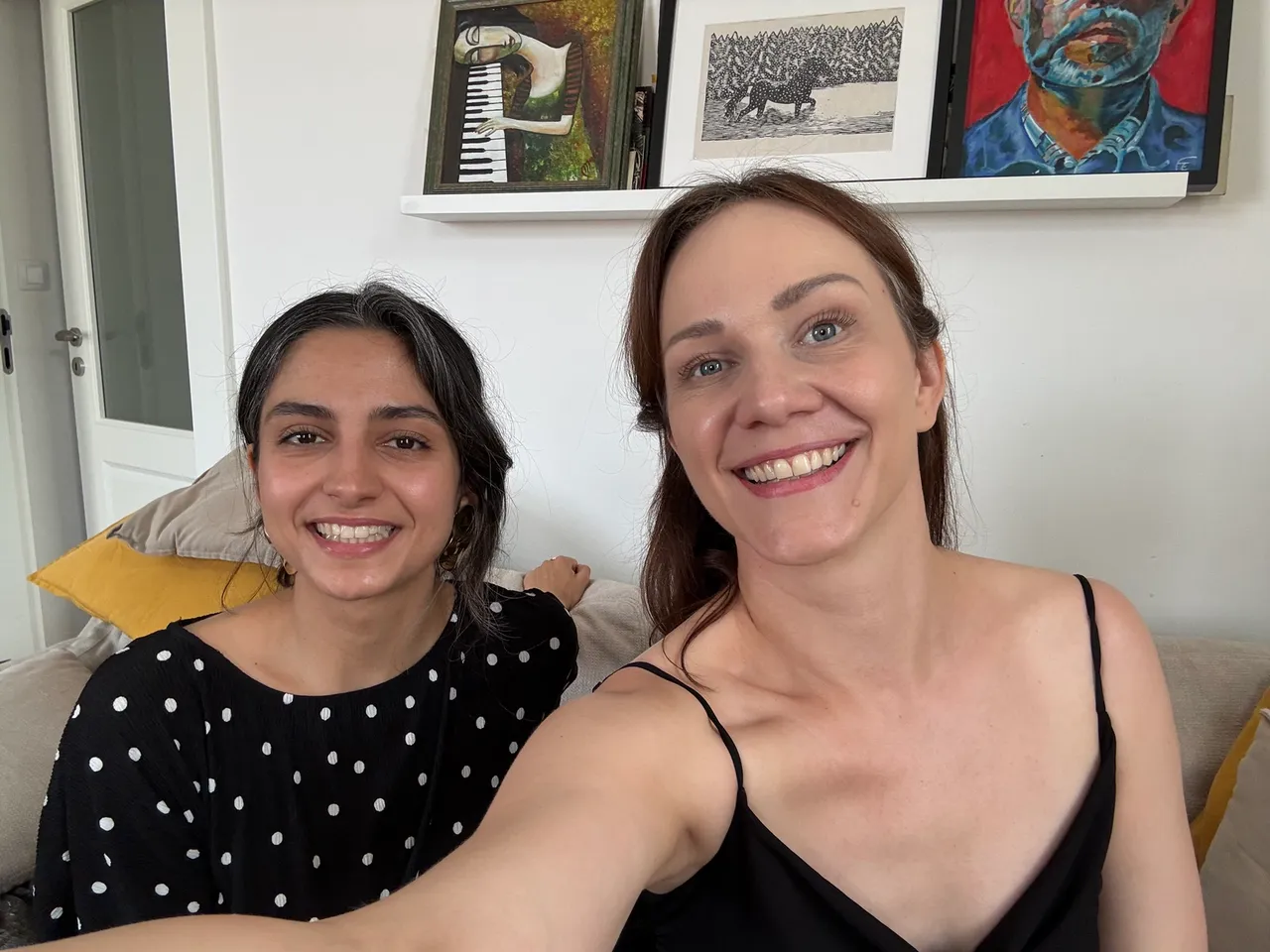
Today's lines belong to Nikki Madi, a musician, composer and teacher. She writes her own piano pieces and original songs for her band, and creates sound design and film music for animation. She spent five years studying music in England, has performed on the TEDx stage, and this year she sat on the Eurovision jury. She teaches singing, piano and songwriting. Children, adults and university students.
And me, too. Nikki is my piano teacher.
How many doors has a single sentence closed?
Maybe you know one like it. From a teacher, from a parent, from someone you trusted at the time. "You're just like me. You'll never be a singer."
People come to Nikki who have carried a sentence like that inside them for years. And yet one day they show up and say: "I'll give it a try."
What came up in the conversation (and why it's worth a listen):
Courage that comes before the first note
"It takes a lot of courage. That first big step is theirs. We all know what it's like when someone takes away our confidence in something. It's really hard to go into it with any certainty after that."
Nikki admits it moves her every time.
"It's terribly sad how one person's words can influence and change our path."
But she doesn't stop at "what if". In her view, there's no point. She'd rather work with people on how to turn it around.
Who once told you that you weren't cut out for it?
Very precious steps
I ask Nikki whether it wears her out to keep explaining where C is on the keyboard, teaching people things that have long been obvious to her.
"What fascinates me is the process. Someone can't do something at all, doesn't know how to connect with it, and suddenly everything links up in their brain. It's admirable that we humans can manage something like that."
She has a structure for her lessons, but she doesn't cling to it at all costs. When something doesn't suit a student, she doesn't force it. She changes tactics and tries a different angle. Until the person sees for themselves that it can be done.
And then comes the moment she does it all for. She recognises it by the sparkle in the student's eyes and by their words:
"Oh my God, I can't believe it, I did it. So what else can I do?"
The piano as therapy
Nikki originally wanted to study psychology. Her family didn't go for it. But her interest in people stayed - she wants to know why they are the way they are.
"Music is one hundred percent therapy. If I can help someone get to the point where they can play two chords and maybe feel some relief, I'm really glad."
She believes you learn the most about a person when they decide to learn something completely from scratch. They have to take themselves apart in the process.
The invisible block we build ourselves
Is it harder for an adult than for a child? For a seven-year-old, or for someone who's 37, like me?
"What's hard changes. But there's always something hard."
An adult knows why they're sitting there. They want to be there. A child, on the other hand, doesn't overthink. They ask how much longer it'll take, and then they simply do it.
"The way adults overthink, that's simply a block. A pointless, invisible, non-existent block that isn't there until we make it."
Repetition helps. Even if it isn't good the first time, by the tenth time it's easier. Muscle memory.
Deadline first, preparation second
This summer, Nikki set herself a challenge. A forty-five-minute concert, just her and a looper - a device that records what you play and layers it on top of itself. In the end, a single voice can sound like a choir.
What's interesting is the order in which she creates.
"I booked the concert and then threw myself into it. It wasn't that I worked on it and only booked a concert once I was ready. The other way round. I needed that goal for myself: by then, I have to have it."
What are you waiting for until you're ready? Maybe it's worth setting yourself a goal and diving in, even if you don't yet know what to do with it or how.
It's never too late
Nikki's mum paints beautifully. It was her lifelong dream, and it never came true. Until five years ago, when Nikki bought her painting lessons.
"She's been doing it for five years now, painting, and her dream has finally come true. So it's never too late to start. Piano lessons, painting, anything."
And soon there may even be an exhibition.
What else comes up in the conversation?
- How does judging work on the Eurovision jury, where jurors aren't even allowed to wink at each other?
- Would you go to a concert where twelve robots play in the philharmonic?
- What story does the piece Andrew's Song carry?
- How do you make a living from music?
And to close, the sentence Nikki sends to everyone who creates something or is just starting out:
"Be brave and try something. It's better to do something than nothing."
And right after it, the second half. Build your life so that it doesn't fall apart if something happens not to work out.
Happy reading, happy listening - until next time. 👋🏻
Take good care.
Nikki and Viki are waving at you.